




27 Jul 3 major reasons designers’ situation on time management is problematic
The design profession involves unique challenges regarding time management as design practitioners are expected to be very creative. Though time-related issues occur amongst every human being, people with creativity seem to experience more unique problems. Recently, many designers have raised the topic of mental health issues and the culture of overwork in design education. This open discussion was conducted on a social media platform by Dezeen, a globally recognized design magazine based in the UK. Designers involved in the conversation agreed that they have experienced both mental and time challenges. Significantly, one of the participants considered committing suicide because of time pressure. Moreover, a copywriter died when attempting to meet a deadline as she had to follow the demanding creative culture in an advertising agency. These phenomena indicate that there are destructive impacts of burnout resulting from imbalanced-workload in creativity-based tasks.
Here are the major reasons why designers’ need help on time management
1. There’s no designer-centered tools

Project management tools that help planning and monitoring project workloads exist on a professional level, but not on a personal level. Project management tools are available on the market and help creative teams plan and finish certain tasks. For example, desktop and mobile application platforms like Resource Guru, Asana, or Trello help scheduling, monitoring, and assigning workload to every team member in real-time. Regrettably, these tools do not accommodate designers’ needs to orchestrate their demanding tasks on a personal level. To illustrate this common issue, it is recognized amongst designers that quantifying the amount of time needed in initial research or ‘finding inspiration’ is a qualitative and subjective task that every individual uses a unique approach for.
2. Creativity is linked to depression and procrastination

One of the time-management problems interestingly comes from the designers themselves. Some of the internal drivers that exist on design practitioners are perfectionism, and lack of self-regulation. As highlighted in the article “The Links Between Creativity and Depression” on the Professional Association of Design (AIGA), common designer routines prevent designers from enjoying a proper social life because they are overworked; however, they are not satisfied with the results (Gosling, 2016). Equally important is the fact that creative people are seen to be linked to depression.

For example, according to a science report in Iceland, creative people, who are defined as visual artists, performers, and authors, are 25% more likely to harbor the genetic variants for depression than other individuals whose profession demands less creativity. Additionally, there is a significant connection between creativity and the level of adrenal steroid which is linked to an increase of “intense negative emotions”. Moreover, compared with ordinary people, a creative person is more open and tolerant to ambiguity (Meltzer, 2015) which allows them to procrastinate, yet on the other hand, procrastination makes them more creative (Subotnik et al., 1999). These facts affirm that design practitioners may have numerous internal drivers that affect their behaviors in using their time.
Source: Polygenic risk scores for schizophrenia and bipolar disorder predict creativity., The Dark Side of Creativity: Biological Vulnerability and Negative Emotions Lead to Greater Artistic Creativity., Understanding the ambiguity and uncertainty in creative processes when using arts-based methods in education and working life., Procrastination Revisited: The Constructive Use of Delayed Response.
3. The demanding culture in design education
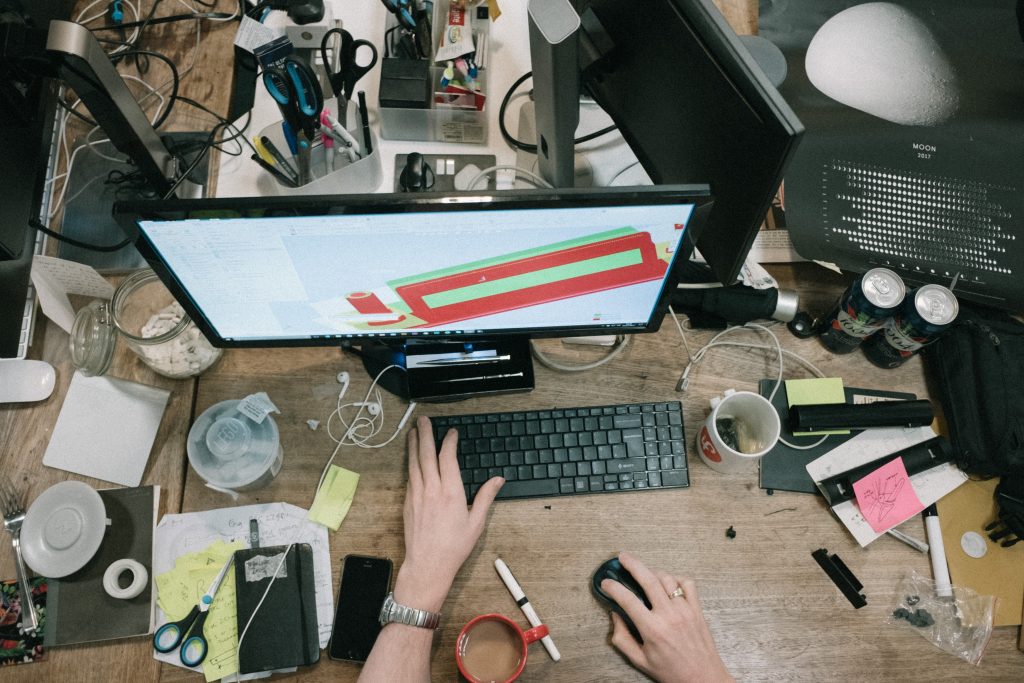

In contrast with the internal ones, external factors such as the education system and the working culture, which promote unhealthy working habits of design practitioners, are known contributors to the problem. On a systemic level, there is a lack of material about time management or self-regulation taught to design students. Instead, it is very common in many design colleges around the globe that students have loads of assignments as homework, in addition to the competitive culture that pushes students to present their best works. Accordingly, research on the connection between personal issues, excessive workload, and the educational system, with regards to designer’s time-related issues is still new, and further research is needed to clarify it.
Source: Overworked architecture students have “considered suicide.”
I am currently on progress on doing my research that explores the connection between time management and design practitioners’ risk of burnout. It begins by dissecting the common phenomena related to time management in design practice. Then, the findings will be routed back and forth to the experiences of the professional designers who have gone through multiple levels of design education and/or have experience leading design teams, as well as to the productivity culture in the design educational system. This approach is expected to discover the unidentified and undiscussed gaps. Stay tuned for the latest time and effort management content on designers.

An award-winning designer who turned out in Aalto University’s transdisciplinary International Design Business Management (IDBM) program in Helsinki.
No Comments